
New research reveals tiny lead fragments in hunted meat pose health risk
Synchrotron X-rays show particles far tinier than previously shown and in concentrations exceeding levels set by human health agencies
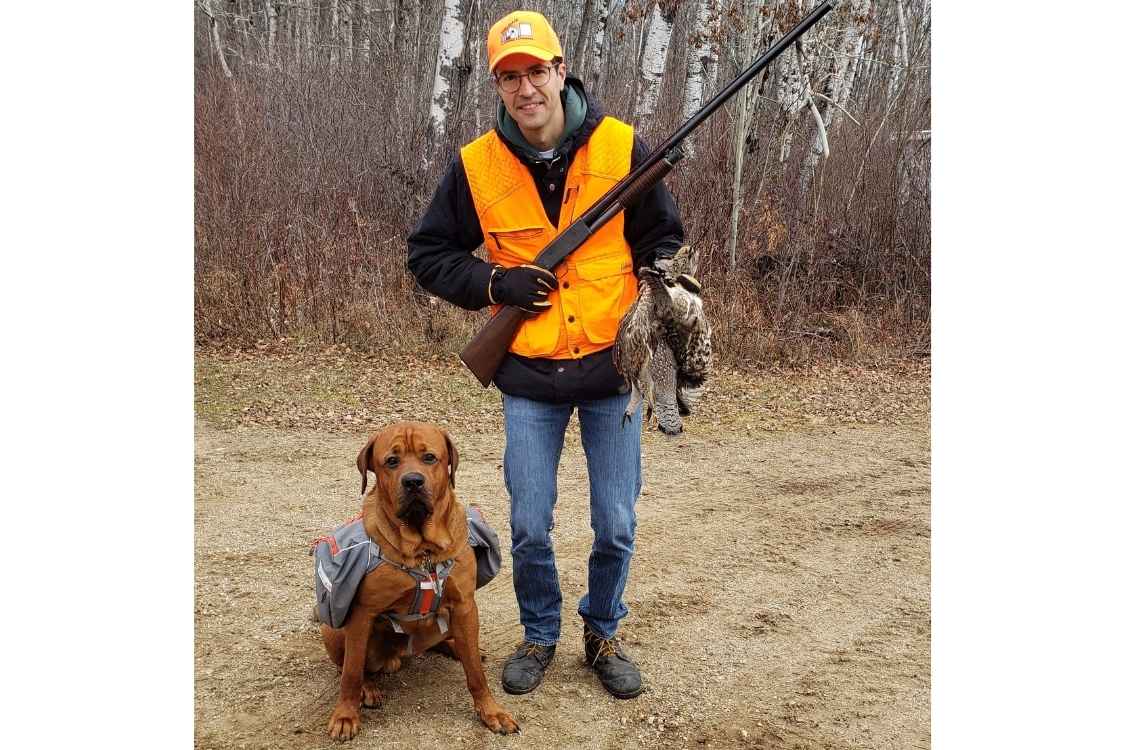
By Greg BaskyThis fall, when Adam Leontowich headed to southeast Saskatchewan to hunt whitetailed deer and ruffed grouse, he once again opted for lead-free ammunition -- cartridges with copper bullets for his .308 rifle and shells with steel pellets for his 12-gauge shotgun. It’s the fourth hunting season that he’s done so.
While Canada implemented a full ban on the use of lead shot for hunting migratory birds like ducks and geese in 1999, many hunters – particularly those after large game and upland game birds – continue to use ammunition that contains lead, which is toxic to humans and linked to an increased risk of several types of cancer.
New research published by Leontowich, a staff scientist at the Canadian Light Source (CLS) at the University of Saskatchewan, shows that fragments of lead left behind in hunted meat are far tinier than previously shown and – more alarmingly -- present in concentrations exceeding levels set by human health agencies.
In a 2022 study, Leontowich showed that fragments of lead from bullets fired into ballistic gelatin (the same material used in shows like CSI) were far smaller and more widely dispersed than previously shown. This new study is the first time that such tiny fragments, some as small as 50 nanometers in diameter, have been observed in game meat harvested from actual hunting. (For comparison purposes, a human hair is thousands of times larger, at 50,000 to 100,000 nanometers in width.)
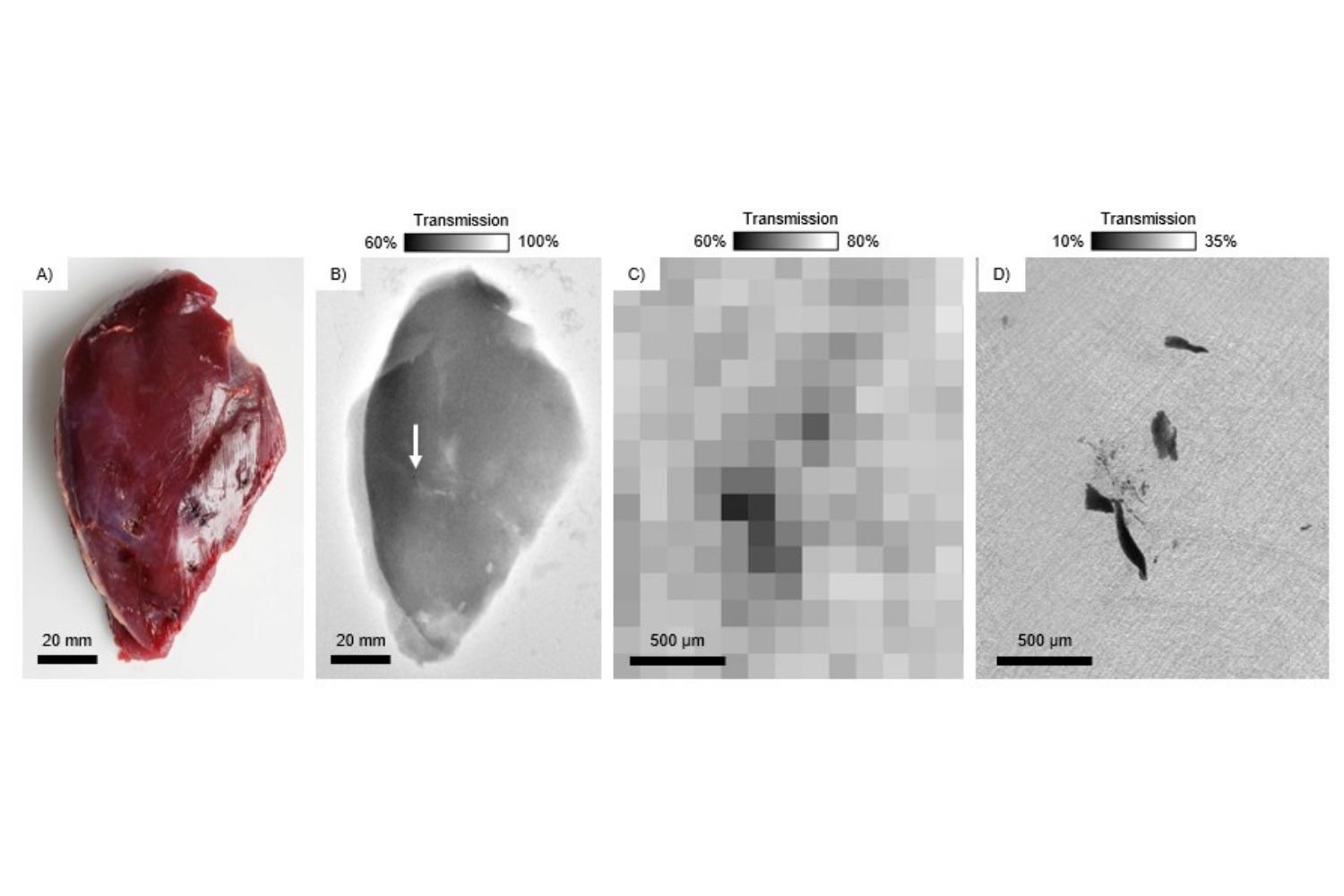
Leontowich and colleagues compared images generated with standard X-ray equipment – such as that used in hospitals – to images generated with synchrotron X-rays, which are thousands of times brighter, and electrons. Some agencies in the US – including food banks in at least one state (Minnesota) – use medical X-ray equipment to screen for lead in hunted meat that’s been donated.
The new research, says Leontowich, proves there’s no value in scanning meat for lead ammunition fragments with normal X-ray equipment because the light is not sufficiently bright to detect lead particles which are smaller than the width of human hair -- essentially lead “dust”, and can’t positively identify suspected objects as lead at all.
“We used techniques with much higher spatial and energy resolution, so we could see finer and finer details and smaller and smaller particles,” says Leontowich. “We could compare our synchrotron-based method with the hospital X-ray method and show that there are small fragments you can’t see with the hospital X-rays that we can see here, and we could quantify that amount of material. We found that the amount you can’t see with hospital X-rays exceeds safe levels for ingestion.”
Lead poses a health risk to people who consume hunted meat, but also to scavenger animals who eat the remains left in the field by hunters.
The researchers did some of their imaging at the CLS, and some at the Advanced Photon Source, a U.S. Department of Energy (DOE) Office of Science user facility at DOE’s Argonne National Laboratory, located outside Chicago. Data were captured at less than 10 nanometers of spatial resolution, allowing scientists to see and quantify nanometer-scale particles in the samples.
“It’s always better to use as many tools as possible to look at a problem,” says Leontowich. “The BMIT-ID beamline here (at CLS) provided an important part of the picture. The imaging we did at the APS gave us another perspective on this issue – it allowed us to focus in even tighter and deeper into the material.”
He says the takeaway message from this new study is simple: There are alternative forms of ammunition that don’t contain any lead, so the health and environmental impacts are eliminated, “I know from experience that it’s just as effective as the lead-based ammunition for hunting, and there’s no real difference in cost when you consider all the costs involved with even a one-day hunting trip. There is no real reason to continue using lead-based ammunition for hunting.”
--
Leontowich, Adam FG, Arash Panahifar, Si Chen, Burke Barlow, and Kirsty EB Gurney. "Lead micro-and nanoparticles directly observed within gunshot wounds in hunted game meat." Scientific Reports 15, no. 1 (2025): 36364. https://doi.org/10.1038/s41598-025-20285-2
Access images and B-roll related to this research
Media Relations:
Greg Basky
Communications Coordinator
Canadian Light Source
306-370-9446
greg.basky@lightsource.ca