
Students on the Beamlines: 20 years of inspiring young researchers
Since 2006 1,148 high school students from across Canada and abroad have conducted research at the CLS
By Canadian Light SourceIn June 2006, a group of 25 Grade 11 physics students from St. Joseph High School in Saskatoon made history at the Canadian Light Source (CLS). Guided by their teacher, Andrea Regier, they became the first high school students in the world to conduct experiments at a synchrotron.
What began as a one-time opportunity quickly grew into something much larger.
Andrea Regier had approached CLS beamline scientists Robert Blyth and Tom Regier in search of a hands-on learning experience for her students. With support from Tracy Walker, then the CLS education coordinator, the group was given rare access to the SGM beamline. At the time access was restricted for such young people, strict safety requirements meant one-to-one supervision, and the visit was expected to be a one-time exception.
Instead, it became the foundation for Students on the Beamlines (SotB)—an innovative, award-winning program that has connected hundreds of students and teachers to real-world scientific research.
Two decades of impact
Over the past 20 years, Students on the Beamlines has grown into a national and international model for experiential science education.
- 1,148 high school students in 139 groups, supported by 221 teachers, have conducted research at CLS
- 67 external professionals have contributed as science mentors, alongside 205 CLS staff
- Participants have come from nine provinces, two territories, and international locations
- 115 high school student projects have been documented, many with posters archived in the CLS Virtual Classroom
- 25 student presentations are available on YouTube, sharing their research with a wider audience
The program’s influence extends well beyond high school classrooms. Its inquiry-based approach has informed undergraduate teaching at the University of Saskatchewan, McGill University, and King’s College, with more adoption underway elsewhere.
Internationally, the SotB model has helped shape education and outreach programs at major research facilities, including MAX IV (Lund, Sweden), NSLS-II (New York, USA), Argonne (Illinois, USA), ALS (California, USA), DESY (Hamburg, Germany), Diamond (Oxfordshire, UK), SESAME (Allan, Jordan), Elettra (Trieste, Italy), LAAAMP (Lightsources for the Americas, Africa, Asia, the Middle East, and Pacific), and CERN (Geneva, Switzerland).
In recognition of its impact, the program received the Canadian Nuclear Society’s Education and Communication Award in 2012. It has also been the subject of graduate research examining authentic scientific inquiry, student engagement, and transformational learning.
Learning that lasts
For many participants, the experience has had a lasting influence on their education, careers, and confidence.
“This project taught me more about the scientific method… gave me confidence in my abilities and, above all, made me realize that I shouldn’t hesitate to take on projects I don’t know much about.”
— Public Safety Advisor, Government of Canada
“It definitely helped me make that decision (to pursue science at the post-secondary level),”
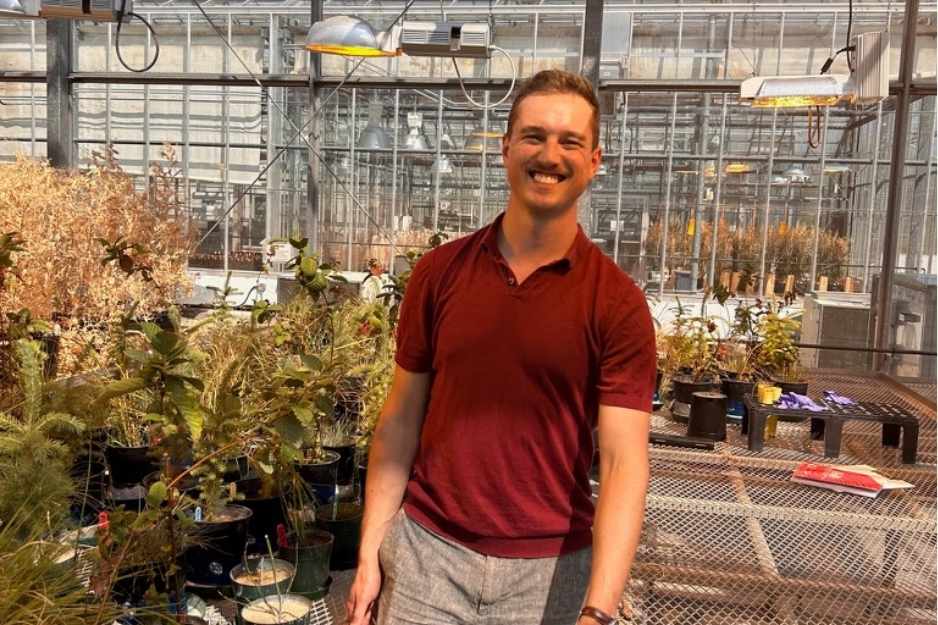
— Levi Lundell, PhD student, Soil Science, USask
“It got me more interested in research, more comfortable being a woman of colour in sciences, and adept at teamwork and public speaking.”
— Student, University of Bristol Veterinary Sciences
“It was probably the spark that led me to love university studies… which in turn led me to earn two master’s degrees.”
“It remains one of my favourite experiences… my first opportunity to present scientific work before an audience, with lasting impacts on how I approach research communication.”
— Postdoctoral researcher in science education
These reflections highlight a consistent outcome: SotB does more than teach scientific concepts—it builds confidence, curiosity, and a sense of belonging in research environments.
From student to scientist
The program has also helped shape career paths, including within CLS itself.
Glenn Hamonic, now a Senior Project Manager at CLS, first came to the facility as a SotB participant in 2009. As a high school student, he and his classmates investigated the chelation of vitamin supplements using the SGM beamline, working alongside scientist Robert Blyth and education coordinator Tracy Walker.
His journey reflects a common theme: early exposure to real-world research can influence future choices and open pathways into science and innovation careers.
Connecting science, creativity, and community
Students on the Beamlines has supported a diverse range of projects that connect science to broader community and environmental issues.
In 2010, students from Centennial Collegiate combined scientific research with artistic expression after studying the effects of acid rain on boreal forest soils. Their work led to a large-scale sculpture installed at their school (with a smaller scale version on the CLS mezzanine), translating scientific findings into a public, visual form.
Other groups have engaged audiences across Canada through presentations and outreach, demonstrating how student research can extend beyond the classroom.
Advancing inclusive and Indigenous-led learning
The program supports collaborations grounded in Indigenous knowledge and perspectives.
Students from Carry the Kettle Nakoda Nation applied both scientific and Traditional Knowledge to study how nutrition and environment are reflected in the chemistry of bison hair. Working alongside Elders, Knowledge Keepers, scientists, and educators, their project reflects the concept of Etuaptmumk (“two-eyed seeing”)—bringing together different ways of understanding the world.
Their work received national media attention and was featured in a non-fiction book on bison, illustrating how student research can contribute to broader conversations about sustainability, culture, and science.
Inspiring educators
Teachers are central to the program’s success, and many have integrated SotB approaches into their broader teaching practice.
Award-winning educator Joe Muise, recipient of the Prime Minister’s Award for Teaching Excellence in STEM, credits the program with shaping his approach to experiential learning.
“My experiences leading students through the Students on the Beamlines program has inspired me to search out more experiential learning opportunities… and helped me to see myself as a scientist.”
His work has since expanded into citizen science initiatives, demonstrating how SotB can influence not only students, but also the educators who guide them.
Looking ahead
Twenty years after that first group of students studied their samples at a beamline, Students on the Beamlines continues to evolve while staying true to its original purpose: giving young people the opportunity to participate in authentic scientific research.
By connecting classrooms to a national research facility, the program helps students see themselves not just as learners, but as contributors to science.