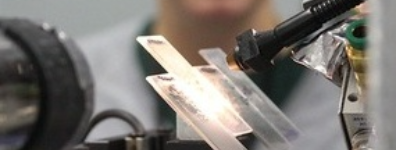
From mining, biotechnology, and pharmaceuticals, the environment and health, to agriculture, nanotechnology, manufacturing and oil and gas, synchrotron science is a unique and invaluable tool for industrial research and development.
The CLS offers a unique service to companies in around the world. Synchrotron-based measurements such as X-Ray Absorption Spectroscopy, X-Ray Photoelectron and Auger Spectroscopies, X -Ray Photoelectron Emission Microscopy, X-Ray Fluorescence, X-Ray Diffraction and Infrared Spectroscopy can provide exceptional insight into industrial materials.
By increasing our understanding of chemical bonding and structure, we gain powerful insights into substances as varied as soils, mine wastes, catalysts, ores and minerals, biological tissues, functional foods and nutrient supplements, forensic evidence and manufactured materials such as metals and alloys, ceramics and polymers.
We offer:
- Public and private sector solutions
- Emerging industry solutions
- Non-disclosure agreements and IP retention
- Advanced technology
- A trusted reputation and proven industrial relevance
The CLS industrial science team provides the following services:
Synchrotron light is an invaluable resource in many studies related to the environment, and is used to analyze contaminants in order to understand their release into the surroundings, their mobility and toxicity.
The ability to discriminate chemical oxidation states and compounds containing trace elements such as arsenic, selenium or chromium at the parts per million level makes X-ray Absorption Spectroscopy an ideal technique to investigate contamination in the environment.
Environmental and mining-related samples ranging from ores to slurries, to wet and dry soils, to air particulates can be analyzed in situ using synchrotron techniques to reveal species chemistry, trace element distribution, and crystal structural information. Such measurements are of particular interest in the areas of mineral exploration and processing, environmental remediation, security and safeguards, and metals process technologies.
Services include:
- Waste characterization (radioactive, primary metals, non-metallic mineral products)
- Aerosol analysis (metallic and mixed element aerosols, respirable particulate matter)
- Metal speciation (critical for environmental site assessments, remediation and fate and transport modeling)
- Mapping of Elements and Chemical compounds
- Source rock and reservoir characterization
Our Analyses readily identify:
- amorphous and crystalline material including metastable species
- spatial correlations among chemical species
- mixtures of oxidation states
Pharmaceuticals
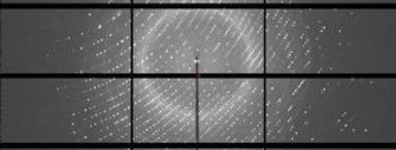
A special application of synchrotron light is the ability to determine the structure of proteins and other large molecules using crystallography. The speed and accuracy of synchrotron macromolecular crystallography is vital to genomics research and rational drug design. Research into the 3-dimensional structure of proteins facilitates the development of designer drugs with specific therapeutic activities.
Services include:
- High-resolution protein crystallography
- Characterize metals in proteins
- Patent validation
Life Sciences
In areas of plant and animal biology, infrared and X-ray spectromicroscopy can be particularly useful for mapping the distributions of nutrients (proteins, carbohydrates and lipids) and anti-nutritional components (lignin). In addition, seeds, stalks and other plant tissues can be analysed for chemistry of their essential elements by X-ray absorption techniques. Several synchrotron techniques can be utilized to examine the chemical distribution of biological molecules in new seed cultivars, new processes for foods or feeds, new biomaterials and within diseased or normal tissues (plants, animals and humans).
Services include:
- Nutraceutical analysis
- Tissue and cellular mapping
- Structural proteomics
Materials Science
Synchrotron techniques have become increasingly important for studying the properties of metals, alloys, semi-conductors, nanomaterials, superconductors, and non-conductors such as polymers, minerals, and the surface reactions and interfaces of these materials. A wide variety of high-tech materials and devices will benefit from the high brightness and detailed chemical information provided by CLS capabilities dedicated to materials science research.
Services include:
- Wear analysis
- Thin film analysis
- Corrosion analysis
- In-situ material analysis
- Surface analysis
- Novel materials characterization
- Trace-environmental analysis
- Failure analysis
Last modified: 2009-03-05 17:03:06